

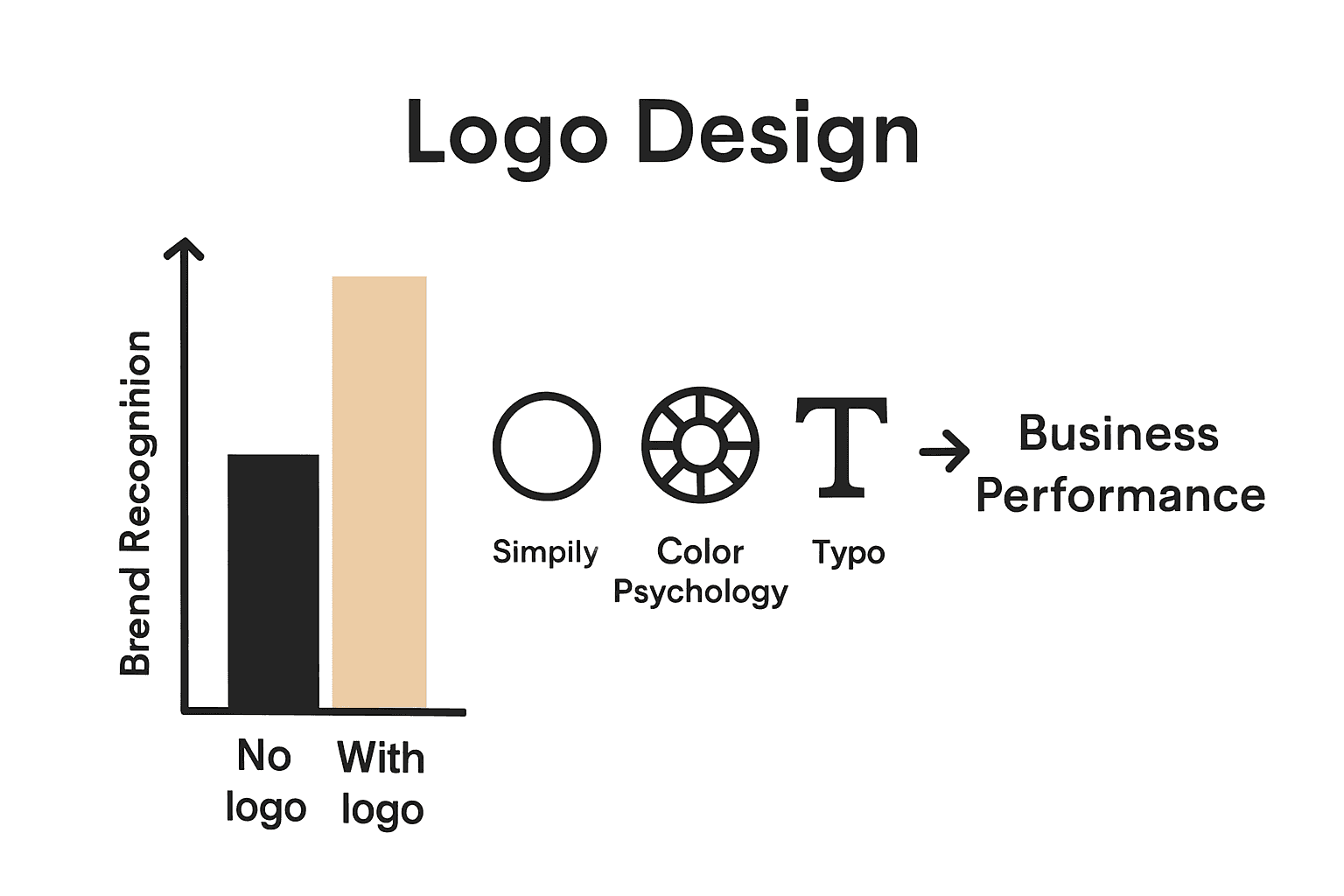
A brand’s logo is often the first thing people remember. In fact, strong logos boost brand recognition by over 80 percent compared to brands without them. Choosing the right emblem goes far beyond graphic appeal. It anchors your business in the minds of customers, distinguishes you from rivals, and shapes perception from the very first glance. Uncover how a strategic logo becomes the cornerstone of enduring brand identity and marketplace success.
Table of Contents
- What Is A Logo And Its Branding Role
- Types Of Logos And Their Purposes
- How Logos Communicate Brand Identity
- Legal And Ownership Requirements
- Common Logo Missteps To Avoid
Key Takeaways
| Point | Details |
|---|---|
| Importance of Logos | Logos are essential for brand identity, conveying core messages and values to consumers, thus influencing brand awareness and business performance. |
| Diverse Logo Types | Different logo types, such as wordmarks and pictorial marks, serve distinct purposes and must align with a brand’s identity for effective communication. |
| Design Considerations | Effective logos utilize simplicity, color psychology, and typography to ensure instant recognition and emotional connection with the audience. |
| Legal Safeguards | Trademark registration and copyright protection are crucial for safeguarding logo designs against infringement and ensuring brand integrity. |
What Is A Logo And Its Branding Role
A logo is more than just a graphical symbol – it’s the foundational visual representation of a brand’s identity and core message. According to research from Pennsylvania State University, logos play a critical role in building brand awareness and driving business performance.
Logos function as a powerful communication tool that instantly conveys a company’s personality, values, and promise to potential customers. By creating a memorable visual signature, brands can differentiate themselves in competitive markets. International Journal of Business and Management Verticals highlights how strategic logo design directly influences corporate identity and shapes consumer perception.
The key components of an effective logo typically include:
- Simplicity that allows instant recognition
- Color psychology that evokes specific emotional responses
- Typography that reflects brand personality
- Scalability across multiple digital and print platforms
Whether you’re a startup or an established business, your logo serves as the visual cornerstone of your brand strategy. It’s the first visual touchpoint that communicates your unique value proposition and creates an immediate emotional connection with your audience.
For a comprehensive understanding of how branding drives business value, check out our guide on why brand delivers real business ROI.
Types Of Logos And Their Purposes
Logos are not a one-size-fits-all design element, but rather a diverse set of visual representations tailored to communicate a brand’s unique essence. According to research from ArXiv, different logo types serve distinct purposes in brand communication and visual storytelling.
The primary logo types include:
- Wordmarks: Text-based logos featuring the brand name in a distinctive typography
- Lettermarks: Logos composed of initials or abbreviated company names
- Pictorial Marks: Graphic icons or symbols representing the brand
- Abstract Marks: Geometric or conceptual designs that suggest the brand’s personality
- Combination Marks: Integrating text and graphical elements
- Emblems: Traditional logos where text is enclosed within a symbol or badge
Research exploring visual brand representations suggests that ArXiv recognizes the strategic importance of selecting a logo type that resonates with a brand’s core identity. Fashion and tech industries, for instance, often leverage abstract or minimalist designs to communicate innovation and sophistication.
The selection of a logo type is not merely aesthetic but a strategic decision that impacts brand perception. Each logo type offers unique advantages in communicating brand personality, values, and market positioning. Brands must carefully consider their target audience, industry context, and long-term visual communication goals when choosing their logo design approach.

Interested in diving deeper into brand strategy? Our Luxury Branding Guide provides comprehensive insights into creating memorable visual identities.
How Logos Communicate Brand Identity
Logos are powerful visual storytellers that communicate a brand’s core essence through strategic design elements. ArXiv research demonstrates that color choices in logos play a critical role in shaping consumer perception and evoking specific emotional responses.
The communication of brand identity through logos occurs through multiple sophisticated channels:
- Color Psychology: Specific color selections trigger predetermined emotional and psychological reactions
- Typography: Font styles communicate brand personality (modern, traditional, playful)
- Graphic Elements: Symbolic representations that hint at brand values and mission
- Composition: Arrangement of design elements suggesting brand characteristics
Research from ArXiv highlights how logo placement and design framework can significantly impact brand recognition and consumer attention. A well-crafted logo doesn’t just represent a company – it tells a nuanced story about its identity, values, and positioning in the marketplace.
Consumers unconsciously decode these visual signals, forming rapid impressions about a brand’s personality and promise.
Tech companies might use sleek, minimalist designs to suggest innovation, while artisan brands could employ more organic, handcrafted logo styles to communicate authenticity and craftsmanship.
For deeper insights into creating compelling visual identities, explore our guide on visual identity rules.
Legal And Ownership Requirements
Logo design and ownership involve complex legal considerations that go far beyond mere visual aesthetics. International Journal of Engineering Research and Technology emphasizes the critical importance of understanding legal implications during brand transformations and logo development.
The primary legal considerations for logo ownership include:
- Trademark Registration: Protecting your unique logo design through official government registration
- Copyright Protection: Securing intellectual property rights for original logo designs
- Design Patent: Preventing unauthorized reproduction of distinctive logo elements
- Licensing Agreements: Establishing clear terms for logo usage and commercial rights
Understanding the nuanced landscape of logo ownership requires careful navigation of intellectual property laws. Businesses must conduct thorough trademark searches to ensure their proposed logo does not inadvertently infringe on existing designs. This process helps prevent potential legal disputes and protects the brand’s visual identity.
Designers and businesses should also be aware of the international variations in logo protection laws. What might be considered a unique design in one jurisdiction could potentially violate existing trademarks in another. Comprehensive legal research and potentially consulting with an intellectual property attorney can help mitigate these risks.
For comprehensive guidance on protecting your visual brand assets, our Rebranding Guide offers in-depth insights into navigating the complex world of brand identity legal requirements.
Common Logo Missteps To Avoid
Logo design is a nuanced art that requires strategic thinking and careful execution. Human Resource Management Academic Research Society research reveals that poorly designed logos can significantly damage consumer perception and brand image.
The most critical logo design mistakes include:
- Overcomplicated Designs: Logos that are too complex or difficult to comprehend at a glance
- Poor Color Choices: Selecting colors that clash or fail to evoke the intended emotional response
- Lack of Scalability: Designs that lose clarity when resized for different platforms
- Trendy Design Traps: Logos that quickly become dated due to following short-lived design trends
- Inconsistent Branding: Logos that don’t align with the overall brand personality
According to International Journals, understanding Gestalt design principles is crucial in avoiding common logo pitfalls. Designers must consider how visual elements interact and create a cohesive, meaningful representation of the brand’s identity.
The consequences of logo mistakes extend beyond aesthetic concerns. A poorly designed logo can undermine brand credibility, confuse potential customers, and ultimately impact business performance.
 Successful logos communicate brand essence quickly and memorably, requiring careful consideration of every design element.
Want to dive deeper into creating a powerful visual identity? Our 10 Visual Identity Rules guide offers comprehensive insights into avoiding common branding pitfalls.
Elevate Your Brand With a Powerful Logo That Truly Connects
Your logo is more than just a visual—it carries your brand’s personality, values, and promise. If you’ve struggled with creating a logo that feels authentic, memorable, and scalable, you are not alone. Many businesses face the challenge of avoiding overcomplicated designs, poor color choices, or inconsistent branding that can confuse and deter customers. Our expertise focuses on crafting logos that communicate effectively using proven principles like color psychology, typography, and visual identity rules outlined in the article.

Discover how to transform your visual identity with visual identity strategies and branding tailored for digital products, designed to make your logo work harder for your business. Act now to protect your brand with expert guidance on legal ownership and trademark essentials. Take the first step to build a logo that not only stands out but also builds trust and lasting connections. Explore our comprehensive resources and services at Milda Style, including our in-depth visual identity guide to sharpen your brand’s impact today.
Frequently Asked Questions
What is the primary role of a logo in branding?
A logo serves as the foundational visual representation of a brand’s identity, conveying its personality, values, and unique promise to customers while building brand awareness and driving business performance.
What are the different types of logos, and how do they communicate brand identity?
Logos can be categorized into several types, including wordmarks, lettermarks, pictorial marks, abstract marks, combination marks, and emblems. Each type serves a distinct purpose in visual storytelling and communicates a brand’s essence differently.
How can color choices in logos impact consumer perception?
Color psychology in logos triggers specific emotional responses and influences how consumers perceive a brand. Effective color selection can enhance brand recognition and create an emotional connection with the audience.
What are some common mistakes to avoid in logo design?
Common logo design mistakes include overly complicated designs, poor color choices, lack of scalability, following trendy designs, and inconsistent branding, all of which can negatively affect consumer perception and brand image.